Stromkreis is open – in both directions. Those who receive electricity are welcome. Those who generate electricity are welcome too. And those who have a location where energy could be generated will also find a partner here.
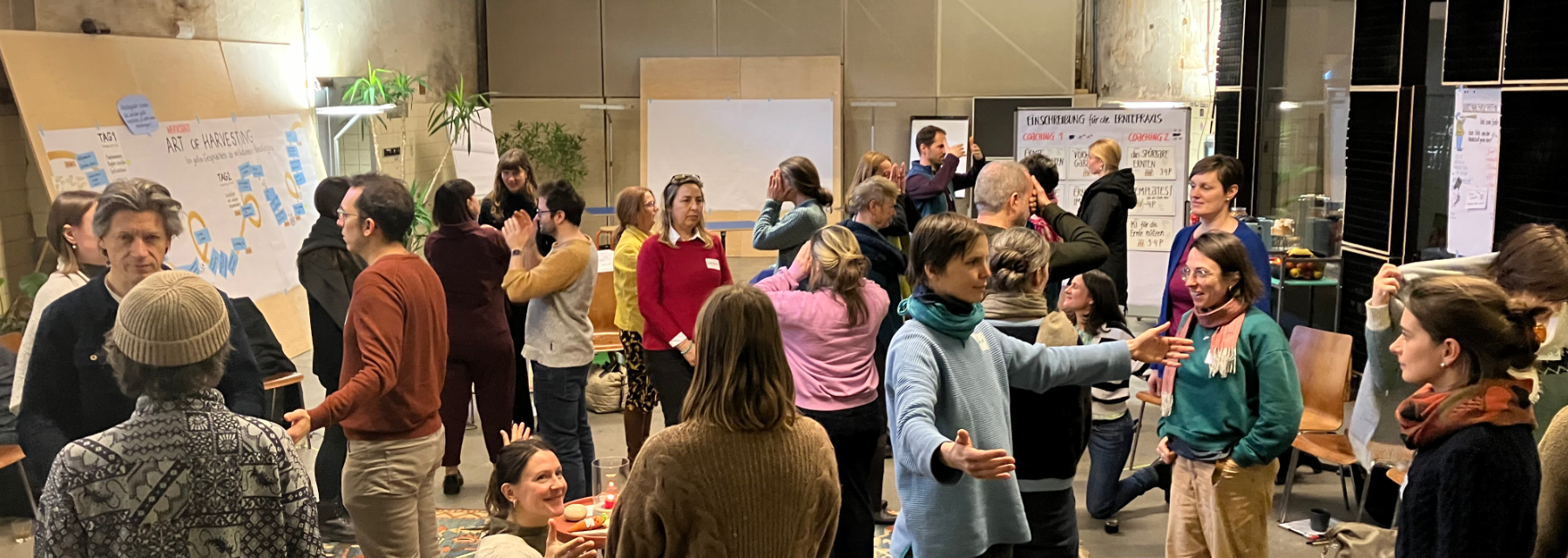
Both private households and organizations ( associations, municipalities, and private businesses ) can become members. It's important that new members align with our common good criteria – purely profit-oriented organizations won't find the right environment with us. We stand for genuine sustainability.
Get in touchCommunity & Culture are the foundations for the energy transition, joining our EEG means you can choose your role in energy generation, consumption & governance.
Fair price for a good product
We believe renewable energy should be stable, fair, and local. Our prices are designed to remain stable, regardless of geopolitical fluctuations in the energy market. They are fair for everyone involved—producers, consumers, and the environment. By sharing locally generated renewable energy, we create a more efficient, democratic energy system that keeps value within the community.
What to expect
Producers benefit by earning from their surplus electricity, while consumers enjoy affordable, locally sourced renewable energy. If you own a rooftop suitable for solar panels, we'd love to hear from you—we're always looking to grow our local energy infrastructure.
Joining
Joining Stromkreis is simple. Just choose the membership type that fits you and provide your information.
Consumer: Join the energy community and receive locally generated renewable electricity.
Producer: Share the surplus electricity from your photovoltaic system with the community and become part of the local energy transition.
So funktioniert es
Electricity tariffs (net) from 01.01.2026
- Energy transition solidarity surcharge¹
- 9 cent/kWh
- Energy transition standard
- 10 cents/kWh
- Energy transition Plus²
- 12 cents/kWh
€12/year annual membership fee
*¹ The Energy Transition Solidarity tariff is aimed at customers with lower incomes (e.g., students, low-wage earners, people undergoing career changes, job seekers, etc.) as well as organizations (e.g., associations) that are socially or environmentally engaged and cannot afford the standard tariff. For this tariff, we request a brief self-declaration, which we will then review and confirm if the requirements are met. Upon request, the annual membership fee is waived for this tariff
² The Energy Transition Plus tariff is aimed at customers with higher incomes who can contribute more than average. The additional revenue is used to finance our planned community energy facilities and our solidarity tariff.
Network usage fees and other charges are not included in our price list and are billed directly by the respective network operator (e.g., IKB, TINETZ, etc.). For electricity distributed within Hötting ( Innsbruck North substation, map here ), you receive a 28% reduced network fee; for other locations, you do not (yet) receive a reduced network usage fee.
Net salary from 01.01.2026:
- Energy transition up to 25 kW(p): 8.0 cents/kWh
- Energy transition above 25 kW(p): 7.5 cents/kWh
- Annual membership fee €12/year
1. The Members:
Roles, Rights, and Obligations
Members in an Energy Community are unique because they are both democratic co-owners of the association and active participants in the physical energy grid.
What Members Can Do (Rights)
Vote on Critical Issues: Every member has a vote in the General Assembly (Generalversammlung). They vote on energy pricing, electing the board, and major investments (e.g., buying a neighborhood battery).
Share and Consume Local Power: Producers get paid for the solar energy they feed into the community grid; consumers get access to cheaper, localized green energy.
Exit the Association: Members have a legal right to leave the association, usually subject to a short notice period (e.g., 1 to 3 months) specified in your bylaws.
What Members Are Expected/Obliged to Do (Obligations)
Pay Membership Fees: Members must pay the basic annual or monthly membership fee (if your bylaws require one) to cover administrative costs, software, and bank fees.
Provide Smart Meter Access: Members must legally authorize the association to access their 15-minute smart meter data via the Innsbrucker Kommunalbetriebe (IKB) network. Without this data, energy cannot be shared.
Abide by the Tariff Rules: Members must pay their internal energy bills on time.
Maintain Separate Grid Contracts: Members must keep their primary energy contract with a traditional supplier (like IKB or TIWAG). The association only covers a portion of their energy; when the sun isn't shining, the traditional grid supplies the rest.
2. The Founders / Board: Roles and Obligations
Once the association is formed, the "Founders" step back, and the elected Board of Directors (Vorstand—typically an Obmann/Obfrau, Secretary, and Treasurer) takes full operational responsibility.
Your Obligations as the Board
Fiduciary Duty & Care: You must manage the community’s money and assets with the diligence of a prudent business manager.
Operational Grid Management: The board (or a software platform you hire) must ensure that the internal billing matches the data provided by the Austrian grid platform (EDA) every month.
Financial Transparency & Audits: You must keep exact financial records. Every year, you must present the financial balance sheet to two independent, internal member-elected auditors (Rechnungsprüfer).
Organize the General Assembly: You must legally call and host the General Assembly at least once a year (or as stated in your bylaws) to report on finances and hold votes.
Personal Liability Risks: While members are safe, the board can be held personally liable under Austrian law if they commit gross negligence. Examples include failing to pay mandatory taxes, operating while completely bankrupt, or mixing association funds with personal bank accounts.
3. How This Affects Decision-Making and Governance
Using an association structure radically democratizes your energy community. It prevents corporate takeovers but introduces specific governance dynamics:
Democratic "One Member, One Vote"
Unlike a standard corporation where the person with the most money gets the most power, a Verein defaults to one vote per person. A neighbor with 50 solar panels has the exact same voting power in the General Assembly as a renter with zero solar panels. This ensures the community's interests remain focused on local benefits rather than maximizing profit for big producers.
Split Governance (Strategic vs. Day-to-Day)
The General Assembly (The Members): Holds supreme power. They must approve the high-level strategy, elect/dismiss the board, change the bylaws, and approve the annual budget.
The Board: Holds operational power. The board handles day-to-day decisions—like troubleshooting data issues with IKB, onboarding new members, or paying software subscription invoices—without needing a community-wide vote every week.
- Lower personal energy costs and carbon emissions.
- Support local renewable generation.
- Contribute to a more resilient regional energy system.
- Help develop innovative community energy models.
- Participate in democratic forms of energy governance.
- Become part of a European effort to create fairer and more inclusive energy systems.
- Importantly, participation is designed to remain simple and flexible. Members can engage at the level that suits them—whether they simply want renewable energy or wish to contribute more actively to community development.